Current
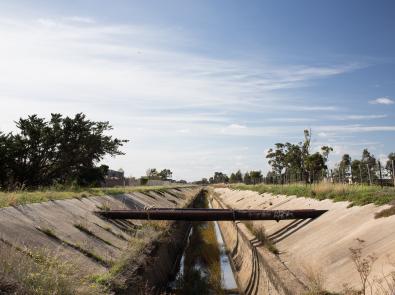
Greening the Pipeline is an ambitious project to transform the Main Outfall Sewer reserve (along Federation Trail) into a parkland for communities in Melbourne’s west.
From Werribee to the city, the linear parkland will provide:
- improved active transport links
- more trees and shade
- unique community spaces to meet, play and relax.
Wyndham City Council is leading the delivery of the project in partnership with Melbourne Water, Greater Western Water, Department of Energy, Environment and Climate Action (DEECA), Department of Transport and Planning, Bunurong Land Council Aboriginal Corporation, and is supported by Greening the West.
Project benefits
The project will create a green corridor along the decommissioned sewer reserve that:
- connects communities
- creates vibrant open space
- improves community health and wellbeing
- enhances active transport links and green corridors
- improves water quality and how water is managed
- celebrates history and cultural heritage.
What’s happening and when?
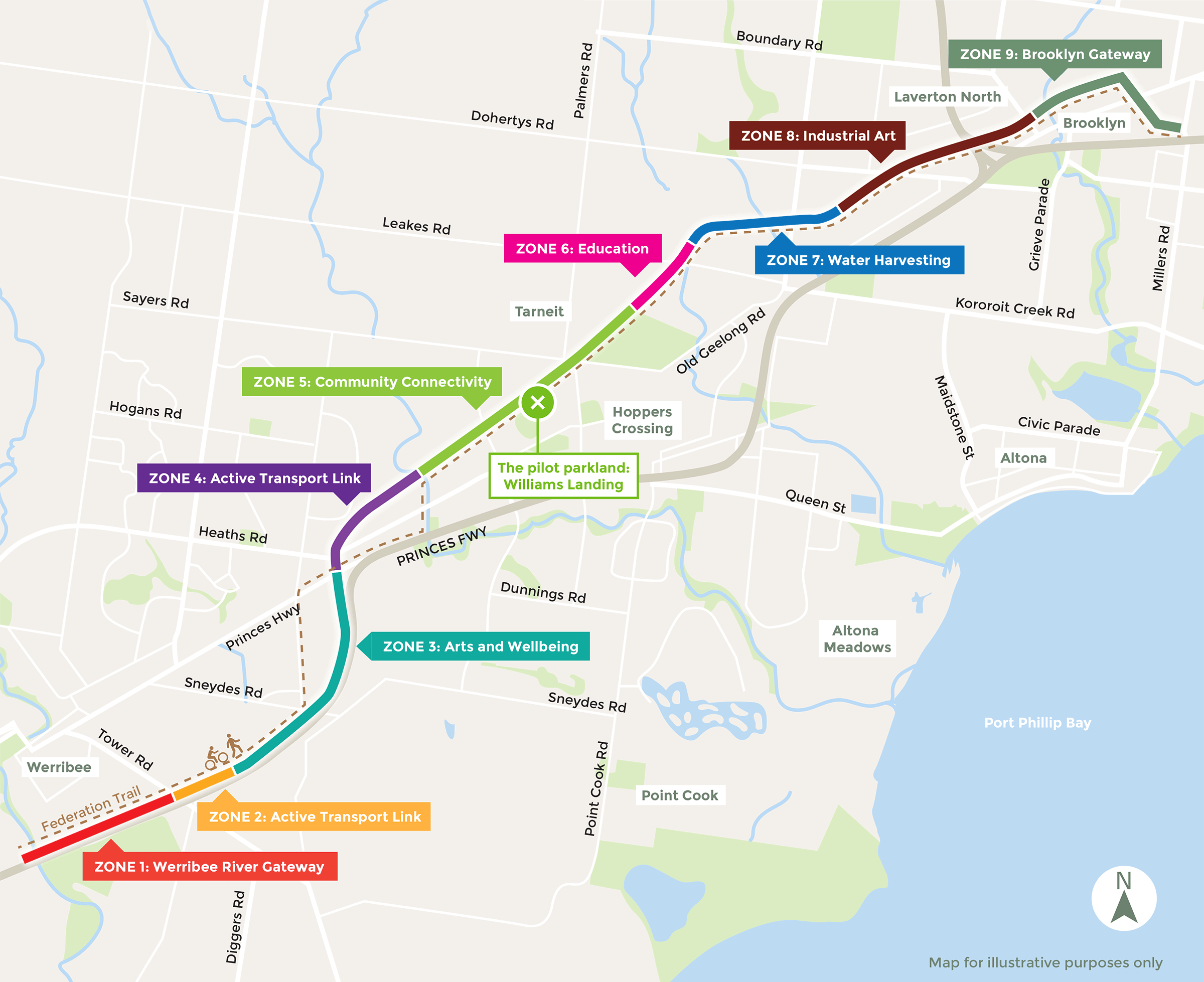
The 27km project has been divided into 9 zones, with planning, design and delivery undertaken in stages. Most of the transformation will occur in the City of Wyndham, and some in the cities of Brimbank and Hobsons Bay.
- Project zones
-
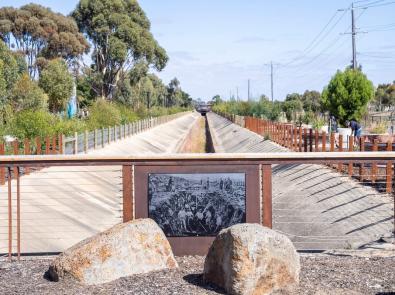
Main Outfall Sewer in Zone 5 West - Werribee River gateway: an inviting space which introduces the start/finish of the pipeline
- Active transport link: to improve access to the pipeline reserve to more residents for walking and cycling
- Arts and wellbeing: a space which supports mental and physical wellbeing
- Active transport link: to open up the pipeline reserve to more residents for walking and cycling
- Community Connectivity: a space that brings the community together and connects existing open spaces
- Education: a space to play and learn
- Water harvesting: to improve water quality
- Industrial art: improving the space for local workers
- Brooklyn gateway: an inviting space which introduces the start/finish of the pipeline
Completed zones
-
Pilot Park
-
Project lead: Melbourne Water
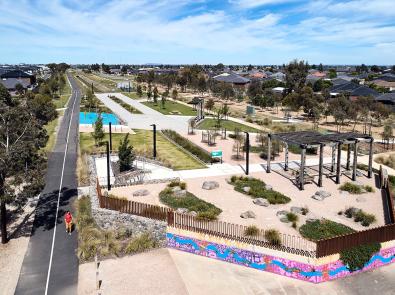
Completed: 2016-17The very first zone of the project, Pilot Park, was built along 100m of the reserve at Williams Landing. It was a showcase to demonstrate the potential for creating a green linear parkland along the whole Federation Trail, and in taking a more holistic approach to water management.
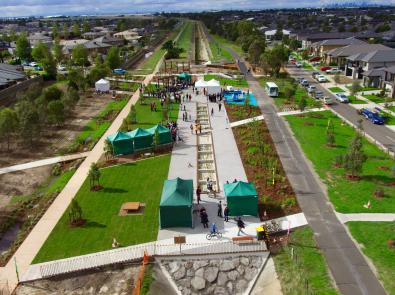
Pilot Park at launch, 2017 The project was initiated in 2013 by Greening The West, City West Water (now Greater Western Water) and Melbourne Water, and supported by Wyndham City Council, City West Water and VicRoads. They identified the site and were granted funding from the Victorian Government.
Shady, vegetated spaces now line the old channel. These provide a healthy and enjoyable environment for socialising and recreational activities in a once divisive and underutilised area.
The park is also fitted with assets to capture, filter and reuse local stormwater for grass, shrubs and trees. The result is a cooler, more comfortable microclimate and new habitats for native species.
Solar lights throughout the park save energy and keep the area active and safe.
A shared-use bicycle and pedestrian path links suburbs from Brooklyn to Werribee, improving liveability and benefitting physical and mental health.
-
Zone 5 West
-
Project lead: Wyndham City Council
Completed: 2021-25
More information: Wyndham City Council website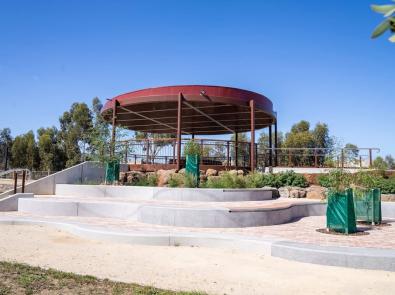
Education lookout in Zone 5 West Due to its size, Zone 5 in Truganina was divided into two sections: Zone 5 West and Zone 5 East.
Zone 5 West – which runs between Forsyth Road and Skeleton Creek – includes:
- a boulder amphitheatre and event lawn
- an education lookout
- a community garden
- extensive revegetation and landscaping, with 22,000 trees and 21,500 plants
- upgrades to Federation Trail
- solar lighting
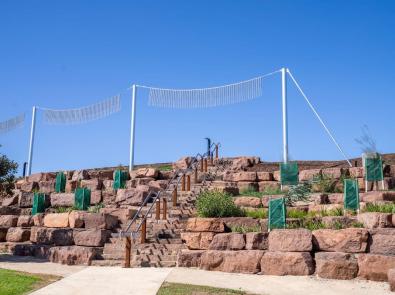
Boulder amphitheatre and ‘Narrarrang Ngarri’ sculpture It also includes the ‘Narrarrang Ngarri’ sculpture by indigenous artist Kait James, which acknowledges the Bunurong people of the Kulin Nations’ care for Country.
This zone also saw completion of the 22-megalitre Arndell Park stormwater harvesting system. This provides a sustainable water source for the new parkland, providing greener open spaces and urban cooling to help address climate change challenges for communities in Melbourne’s west.
- Zone 9
-
Zone 9 in Brooklyn, which crosses Wyndham, Brimbank and Hobsons Bay City Councils, has so far involved extensive planting to increase shade along Federation Trail.
Zones in progress
Due to its size and scale, the Greening the Pipeline project will be delivered in stages over many years. Transforming the remaining sections is dependent on further funding, which all project partners will continue advocating for.
- Zone 5 East
-
Project lead: Wyndham City Council
Status: Starting late 2025
More information: Wyndham City Council websiteZone 5 East – between Forsyth Road and Sayers Road – is being delivered next. This zone will include:
- irrigated garden beds
- a new play space and community events lawn
- improvements to Federation Trail.
Designs have been finalised and the construction tender is scheduled to be awarded in mid to late 2025. Construction is anticipated to start in late 2025.
- Zone 4
-
Project lead: Wyndham City Council
Status: Funding needed
More information: Wyndham City Council websiteCommunity consultation on the concept plans for Zone 4 was undertaken in 2023.
This 1.8km section is expected to include:
- an aqueduct lookout
- a shared path connection to the Federation Trail between Heaths Road and Skeleton Creek
- extensive tree planting
- native grasslands
- seating
- passive raingardens and decks
- a bicycle repair station.
History of the Main Outfall Sewer
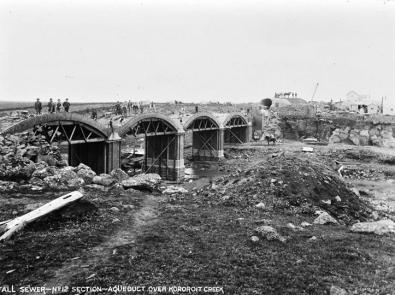
The Main Outfall Sewer includes:
- an open channel lined with brick or concrete
- closed conduits
- three brick aqueducts.
It is an important remnant of the original sewage transfer system that helped Melbourne develop into a modern metropolis – not only solving an urgent sanitation problem, but also allowing the city to expand.
Timeline
1892 – Construction began
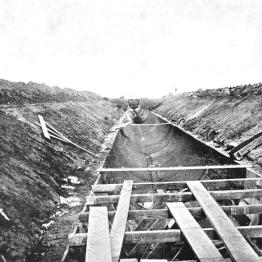
The sewer was a response to the sanitation crisis caused by Melbourne’s phenomenal growth in the 1880s, when untreated waste was dumped directly into waterways. This caused cholera and typhoid to run rife, and Melbourne was nicknamed ‘Smellbourne’.
1894 – Construction completed
The sewer was built by seven contractors employing 1300 workers, and at the time was the largest civil engineering project ever undertaken in Victoria. Its construction is all the more remarkable because despite being conceived during the 1880s boom, it was completed during the catastrophic 1890s depression.

1993 – Operation ceased
The steam-powered Spotswood Pumping Station used to push sewage back up to the surface to start its journey along the Main Outfall Sewer to the Werribee treatment plant. Our sewerage system still operates in a similar way, but the pumping stations are now located at Brooklyn and Hoppers Crossing, and the sewers are covered until they reach the Western Treatment Plant.
2005 – Land transfer
Ownership of the Main Outfall Sewer reserve was transferred from Melbourne Water to the Crown, and the land then licensed to VicRoads to build a bike path. Melbourne Water retains ownership of the Main Outfall Sewer infrastructure.
2009 – Road declared
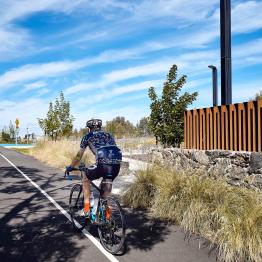
The reserve land was declared a road (named Federation Trail) by VicRoads, under the Road Management Act 2004.
2015 – Greening the Pipeline partnership established
Melbourne Water initiated partnerships with Wyndham City Council, Great Western Water, the Department of Transport and Planning, and Greening the West to develop the vision for the Greening the Pipeline initiative.
2017 – Pilot Park completed
A proof-of-concept park was collaboratively designed with the local community. It delivered a connecting green community space which incorporated recreational opportunities, tree planting and stormwater harvesting for irrigation.