News Story
Most Melburnians don’t think twice when turning on the tap. In the coming months, many households across Melbourne will receive water that has made a remarkable journey, one that begins not in a mountain catchment but in Bass Strait.
This year, the Victorian Government has placed its largest ever desalination order – 150 billion litres. Here’s how it gets from the ocean to your kitchen.
Everything starts at the Victorian Desalination Plant in Wonthaggi. Here, pure water is extracted from seawater drawn from Bass Strait, leaving salt and minerals behind, as part of the treatment process. Minerals are then added back to ensure the flavour and quality match water from Melbourne’s natural catchments, always meeting strict Australian Drinking Water Guidelines.
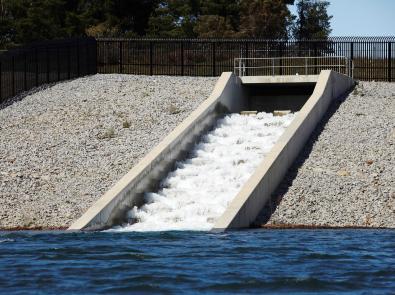
Leaving Wonthaggi, the treated water heads north, 84km through a dedicated pipeline to Cardinia Reservoir in Melbourne’s southeast. Once there, it blends with water from natural catchments. Cardinia acts as a balancing point, absorbing the city’s seasonal fluctuations in demand and maintaining steady pressure throughout the network before water reaches homes and businesses.
From Cardinia, gravity handles most of the rest. Water from Cardinia generally flows south and east, supplying households across the Mornington Peninsula and Melbourne’s southeastern suburbs.
“Desalinated water has become an essential part of how we keep Melbourne’s taps flowing,” said Chris Brace, Melbourne Water Executive General Manager, Service Futures. “As our city grows and our climate changes, it gives us a reliable supply we can draw on when we need it most.”
Desalinated water has been part of Melbourne’s everyday supply for nearly a decade. No matter where the journey begins, the water arriving at your tap meets exactly the same quality standards. Taste remains consistent. Rigorous testing is assured. Only the journey differs in length.