Return to search results
The Future Water Story (Werribee)
The award‑winning Future Water Story is a transformative learning experience where students take charge of their learning, drive the thinking, and shape their own understanding of renewable water resources and our sustainable future.
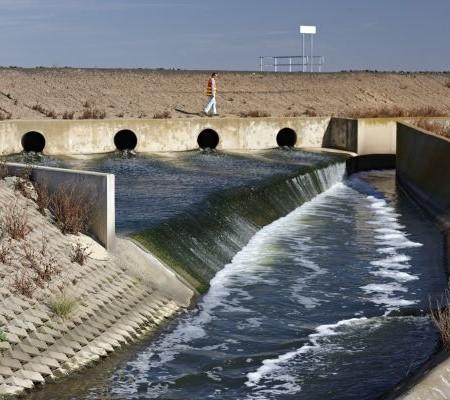
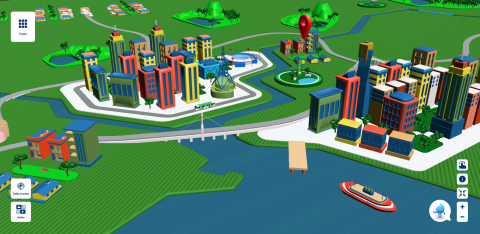
At the Western Treatment Plant, students step into real-world learning where they become active problem solvers by connecting Science, Geography, critical and systems thinking to design a sustainable city. They take on the role of thinkers, innovators and collaborators and use teamwork to test possibilities for the future of their digital city in a way that is hands‑on, engaging and fun. Students leave feeling empowered to influence a more sustainable, liveable future.
Book now
Student activities
Students will:
-
Spend 1 hour engaging with the award winning The Future Water Story digital experience within the Education Centre. During this game they will;
-
Apply systems thinking to evaluate the challenges and opportunities of building a resilient water future, connecting water scarcity, climate change, population growth and sustainable urban design
-
Work in collaborative teams to design solutions, negotiate ideas and make shared decisions to build a circular city using advanced digital tools
-
Critically assess and analyse information from multiple sources to reach evidence-informed decision-making and reflect over the course of the game the consequences of those decisions
-
- Take a 1 hour guided tour through the Western Treatment Plant in your school bus. During this tour they will;
- Understand sewage water treatment management for the liveability and sustainability of Melbourne's water
- Link this understanding to the learnings from The Future Water Story
This is a sample schedule of how the excursion will run. If you are bringing two classes, the sessions will run concurrently. Maximum of 30 participants in each group.
| Time | Description |
|---|---|
| 10:00 am |
Arrival at the Western Treatment Plant Greeting and arrival instructions |
| 10:15am-10:30am | Acknowledgement of Country and introduction to the program |
| 10:30am-11:30am |
Group 1 - Future Water Story digital experience in the Education Centre Group 2 - Western Treatment Plant bus tour on school bus |
| 11:30am-11:45am |
Break |
| 11:45am-12:45pm |
Group 1 - Western Treatment Plant bus tour on school bus Group 2 - Future Water Story digital experience in the Education Centre |
| 12:45pm-1:00pm | Conclusion and farewell from the Education Centre |
Learning outcomes
Learning outcomes and curriculum links cover all activities supplied before, during and after your excursion onsite. Engage with our teaching resources to prepare your students for their experience.
- Year 7 & 8
-
Students will learn how to:
- Analyse water as a renewable resource - Students investigate how water functions as a renewable resource, understand that it is a scare and finite resource, and how water scarcity impacts liveability and sustainability
- Collaborate to develop solutions to environmental challenges - Students apply teamwork, communication and conflict‑resolution strategies while proposing sustainable actions to improve liveability and environmental outcomes.
- Use critical and creative thinking to design sustainable cities - Students collaboratively design a future city using digital tools, applying systems thinking, evaluating competing claims, and selecting criteria to guide decision‑making
- Evaluate ethical and social implications of sustainability decisions - Students consider how values, worldviews and ethical perspectives influence decisions about water, waste, liveability and environmental management.
Curriculum Links
-
Geography: VC2HG8K01, VC2HG8K02, VC2HG8K03, VC2HG8K04, VC2HG8K05, VC2HG8K06, VC2HG8S02, VC2HG8S03, VC2HG8S04, VC2HG8S05, VC2HG8S06, VC2HG8S07
-
Science: VC2S8U09, VC2S8H02, VC2S8H03
-
Critical and Creative Thinking: VC2CC8Q02, VC2CC8R01, VC2CC8R02, C2CC8R04, VC2CC8M03
-
Personal and Social Capability: VC2CP8O01, VC2CP8O04, VC2CP8O05
-
Ethical Capability: VC2CE8U02, VC2CE8D01
- Year 9 & 10
-
Students will learn how to:
- Analyse water security and local water challenges - Students will assess during the game alternative water sources and future risks to water, including the impacts of climate change.
- Propose evidence‑based strategies for sustainable water management - Students analyse environmental, economic and socio-emotional data to recommend actions that support sustainable resource use, liveability, and climate resilience.
- Critique socio‑scientific issues related to water - Students examine how scientific knowledge, ethics, and community values shape responses to complex sustainability challenges (e.g. wastewater management)
- Collaborate to design and justify a future‑focused city - Students work in teams to design an innovative future city, justify their choices using evidence, and communicate their reasoning clearly for different audiences.
Curriculum Links
- Geography: VC2HG10K10, VC2HG10K11, VC2HG10K13, C2HG10K14, VC2HG10K15, VC2HG10K16, VC2HG10S02, VC2HG10S03, VC2HG10S04, VC2HG10S05, VC2HG10S06, VC2HG10S07
- History: VC2HH10K11, VC2HH10K36
- Science: VC2S10H02, VC2S10H03, VC2S10H04, VC2S10U11
- Civics and Citizenship: VC2HC10K09, VC2HC10K10, VC2HC10S02
- Critical and Creative Thinking: VC2CC10Q02, VC2CC10R01, VC2CC10R02, VC2CC10R03, VC2CC10R04, VC2CC10M02
- Personal and Social Capability: VC2CP10O01, VC2CP10O04, VC2CP10O05
- Ethical Capability: VC2CE10U02, VC2CE10D01
-
- VCE Environmental Science
-
Students will learn how to:
- Analyse the factors influencing water security and future water availability - Students assess alternative water sources and evaluate how climate variability and climate change, affect the long‑term reliability of water supplies.
- Propose evidence‑based strategies for sustainable water management - Students interpret environmental, economic and social data to justify actions that enhance water‑use efficiency, reduce demand, diversify supply, and support sustainable and equitable water security for communities and ecosystems.
- Evaluate socio‑scientific issues relating to water management and security - Students analyse how scientific evidence, stakeholder values, ethics and regulatory frameworks influence decisions about wastewater treatment, recycled water use, and the management of water as a shared natural resource.
- Collaborate to design and justify a future‑focused city - Students work in teams to design and defend a future‑focused city model that incorporates sustainable water systems, resource efficiency, liveability considerations and climate resilience, using data and systems thinking to justify their decisions.
Curriculum Links
- Unit 2 - What affects Earth's capacity to sustain life?
- AOS 2: How can we manage food and water security to sustain Earth's Systems?
Prepare for your visit
To get the most out of your visit, be sure to engage with the teaching resources and make sure you understand the safety requirements to attend this site before you come.
- Additional Teaching Resources
-
1. Teaching Guides have been created for you to use in your classroom to compliment the Future Water Experience at the Western Treatment Plant. The lesson plans outline key content and concepts that will enhance your student’s learning experience. There are different resources for you to use pre-visit, during your visit and post-visit.
- Year 7 & 8 Teaching Guide
- Year 9 & 10 coming soon
2. Prime your students by watching this video to learn more about the Future Water Story and their roles on the day.
- Cost and Group Size
-
$360 per group.
Maximum of 30 students per group, and two groups maximum per session.
Example: I have 57 Year 7 Geography students that I'd like to bring on this excursion - how should I book?
You would need to book 2 sessions for a total of $720. The groups will run concurrently with each rotating so that everyone gets to experience both the bus tour and The Future Water Story.
- Duration and Availability
-
Approximately 3 hours arrival, welcome and departure.
Available Tuesdays to Thursdays.
- Safety and Risk Information
-
1. Western Treatment Plant Venue and Safety Information - All participants over the age of 18 (including parents and teachers) will be asked to sign in and agree they understand the information contained within.
2. Child Safe Standards - We are committed to the safety and wellbeing of children and young people, and providing a child-safe environment in line with our Child Safe Policy. All our Education Officers and Interpretation Officers have the relevant legal requirements (Working With Children Check or Victorian Institute of Teaching registration).
3. Cancellations due to safety - All tours will be cancelled on days of very poor or hazardous air quality and/ or on days of a Total Fire Ban. Please see our full Terms and Conditions when booking.
4. Public Liabilty Insurance - Melbourne Water has current public liability insurance and the certificate will be emailed to you upon booking.
Student supervision and discipline is the school/institute's responsibility. Teachers and adults accompanying school groups should actively supervise students at all times.
We reserve the right to cancel a booked tour and ask individuals or groups to leave the site immediately if any action or behaviour is unsafe.
- What to bring
-
All participants must wear appropriate clothing for all weather conditions as activities are conducted outdoors. Clothing must meet these minimum requirements:
- wear long pants/trousers
- wear long-sleeved tops
- wear closed-toe, flat-soled shoes – sandals and thongs are not permitted on site
- cover any open wounds, and report any minor cuts or abrasions that occur while onsite to Melbourne Water
Bring food with you as there is none for purchase onsite.
Bring any learning materials (books, pens etc.) with you.
- How to get here
-
By car or bus
Travel outbound 30 km on the Westgate Freeway/M1 towards Geelong, take the second C109 exit off to Werribee after you have passed the Werribee Open Range Zoo and Werribee River. Once you exit turn left and enter at the Melbourne Water William Thwaite's Drive gate.
At the end of William Thwaite's Drive, turn right down Metropolitan Farm Rd until you see a blue sign indicating the Education Centre. Turn right towards the Education and Cultural Precinct.
Follow this road all the way to the turning circle at the end and park your bus there. The staff will meet you there.
The address for the Education Centre is the Cocoroc Historic Township on Metropolitan Farm Rd, Cocoroc VIC 3030